The lights of the feature match area burned brighter than ever this month as Magic: The Gathering concluded its most prestigious annual event: Magic World Championship 31. With a million-dollar prize pool, the best players from every corner of the competitive scene gathered to decide not just a champion, but the direction of the Standard format itself. New cards, new strategies, and months of preparation all collided in a tournament that immediately reshaped the meta.
From the very beginning, it was clear that one deck had risen above all others. The Standard field had already been shifting thanks to Avatar: The Last Airbender’s arrival, but no one expected Izzet Lessons to take over quite so thoroughly. By the time the dust settled, half of the World Championship Top 8 — four players — had sleeved up the same archetype. Spell-heavy, flexible, and brutally consistent, it became the centerpiece of the entire weekend. The deck punished missteps, rewarded tight play, and gave pilots all the tools they needed to navigate the high-pressure battlefield of Worlds.
But even in a meta this defined, creativity still found room to breathe. Temur Otters, a beloved tempo-driven deck, secured two Top 8 appearances by players who leaned into its synergy, explosiveness, and adaptability. The final two seats reflected the ingenuity that Magic’s top minds are known for: a lone Izzet Looting deck that embraced graveyard synergy in a new way, and an ambitious Sultai Reanimator list that broke through on sheer power and clever tuning for the expected field.
Top 8 – Who Made It and Deck Trends
The Top 8 of World Championship 31 — the final competitors battling for the trophy — converged around just a few dominant deck archetypes.
Here’s how the distribution looked:
| # of Players in Top 8 | Deck Archetype |
|---|---|
| 4 | Izzet Lessons |
| 2 | Temur Otters |
| 1 | Izzet Looting |
| 1 | Sultai Reanimator |
Some key takeaways:
- Izzet Lessons dominated — half of the Top 8 ran that archetype, signaling it as perhaps the most reliable path to high-level success in the current Standard meta.
- Temur Otters remained relevant and powerful, grabbing two spots.
- The remaining two slots show some diversity — Izzet Looting and Sultai Reanimator — proving that, while meta-defining archetypes prevail, creative or “rogue” decks can still break through.
Most decklists heavily featured new cards from Avatar: The Last Airbender — showing how much the new set is shaping competitive Standard play.
Winner & Notable Players
- The champion of World Championship 31 was Samuel Pardee — piloting Izzet Lessons. MTG Decks+2mtg.cardsrealm.com+2
- Also notable is Ken Yukuhiro: he entered Worlds already as a Pro Tour champion and top contender for Player of the Year. His strong showing throughout the event — including a deep run — affirmed his status among the elite
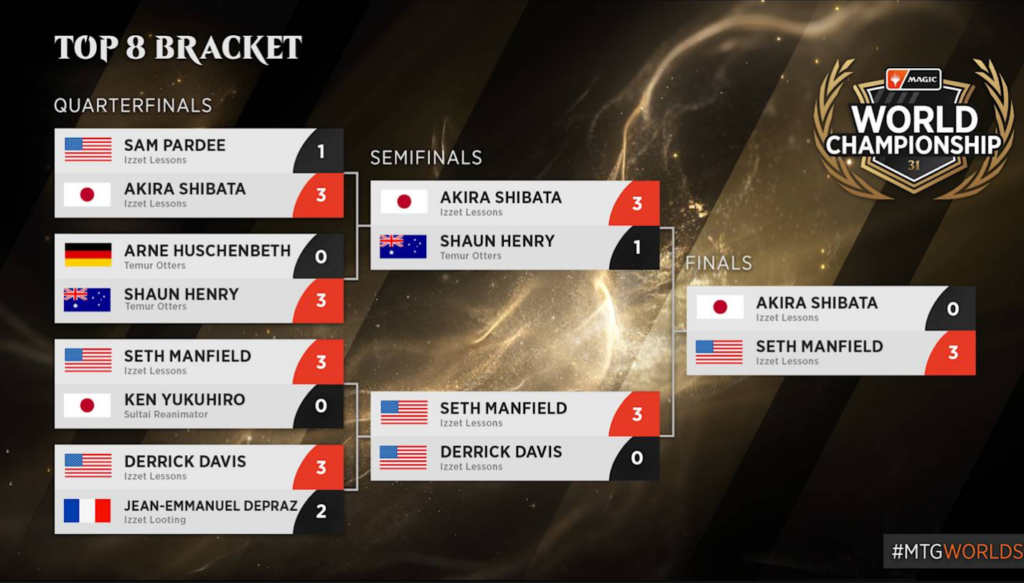
When the final match concluded and the confetti fell, it was Pardee who stood at the center of the stage, hoisting the trophy as the newly crowned Magic World Champion. His victory cemented Izzet Lessons not just as a strong deck, but as the definitive archetype of the season — a list so cleanly constructed and highly tuned that it felt inevitable in hindsight. For Pardee, the win brought prestige, invitations to every major event next season, and a well-earned share of the million-dollar prize pool. For the rest of the competitive world, it served as a signal: adapt or be left behind.
Now, as pros and local grinders alike turn their eyes to the next Pro Tour cycle, the impact of this World Championship is already rippling outward. Expect local tournaments, online events, and even kitchen-table brews to echo what was showcased on Magic’s grandest stage. Izzet Lessons will almost certainly dominate the early metagame, but the presence of Temur Otters, Izzet Looting, and Sultai Reanimator in the Top 8 proves that innovation is far from dead. The best players will be hunting for cracks in the new meta — and when they find them, the next breakthrough deck will emerge.