Tribal strategies remain a durable pillar of Commander because they convert ordinary creature curves into coherent engines of synergy, tutoring, and redundancy. Yet the format’s discourse often concentrates on a narrow set of marquee choices, leaving many effective tribal leaders underexplored. In 2026, the most rewarding tribal experiences may come from commanders that are statistically less popular but structurally powerful: they support linear game plans while still allowing interaction, adaptation to metagames, and distinctive deck identities. The following commanders are “underrated” in the sense that they frequently outperform their visibility, particularly when built with attention to pacing, resource conversion, and table politics.
Criteria for an Underrated Tribal Commander
Assessing underrated options requires more than noting low inclusion rates. The most useful candidates exhibit three properties. First, they provide repeatable value or scaling payoff tied to creature type, rather than a single burst that demands immediate protection. Second, they offer structural compression: one card performs multiple roles such as card advantage plus board control, or ramp plus threat density. Third, they supply resilience, either through recursion, inevitability in combat, or the ability to pivot when the primary tribal axis is disrupted by sweepers or stax elements. With these criteria, several commanders stand out as robust tribal anchors that warrant renewed consideration in 2026.
Gisa and Geralf: Zombies as a Recursion Laboratory
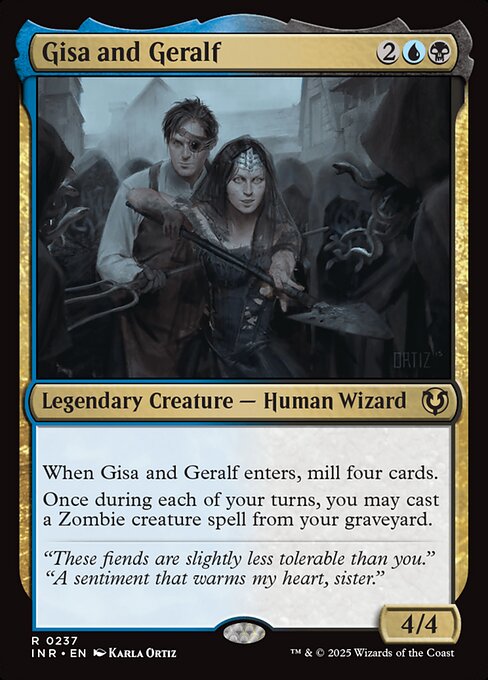
Gisa and Geralf remain an unusually efficient way to turn a Zombie deck into a controlled recursion system. Their enters-the-battlefield mill is minor but strategically relevant because it increases access to situational bodies and enables graveyard-dependent lines without committing additional deck slots. More importantly, the ability to cast a Zombie from the graveyard each turn stabilizes post-wrath recovery and supports a “toolbox” approach: one can replay disruption pieces, sacrifice fodder, or value creatures depending on table state.
Why the Commander Is Underplayed
Many players prefer Zombie commanders that generate tokens explosively or threaten immediate lethal damage. Gisa and Geralf appear slower, but their strength is temporal: they convert each turn cycle into material advantage and reduce the opportunity cost of trading creatures in combat.
Kumena, Tyrant of Orazca: Merfolk Beyond “Go Wide”
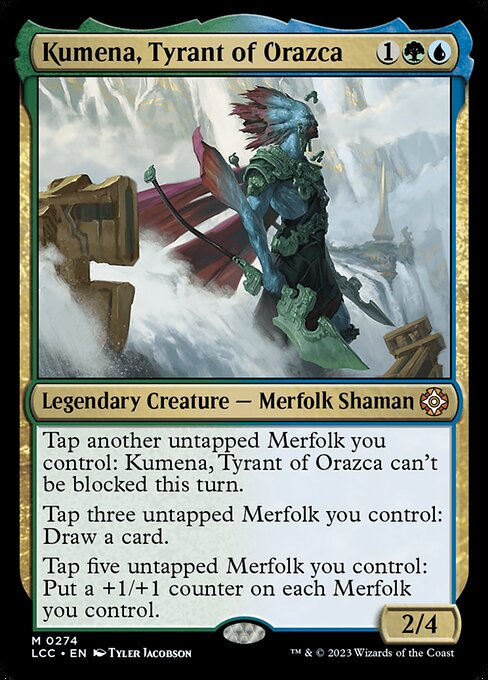
Kumena is often interpreted as a simple tribal lord, yet his real contribution is modular resource conversion. By tapping Merfolk in changing quantities, the deck gains access to incremental card draw, team-wide growth, and evasion. This creates a decision-rich framework in which the same board can function as pressure, defense, or an engine. In contemporary Commander environments where engines are targeted, Kumena’s flexibility allows the Merfolk player to avoid overcommitting while still developing advantage.
Construction Emphasis in 2026
The strongest Kumena lists prioritize untap effects and low-cost Merfolk that provide passive utility (interaction, ramp, or protection). This shifts the tribe away from purely combat arithmetic and toward a tempo-control identity that remains recognizably tribal but performs well across heterogeneous pods.
Arahbo, Roar of the World: Cats with Consistent Pressure
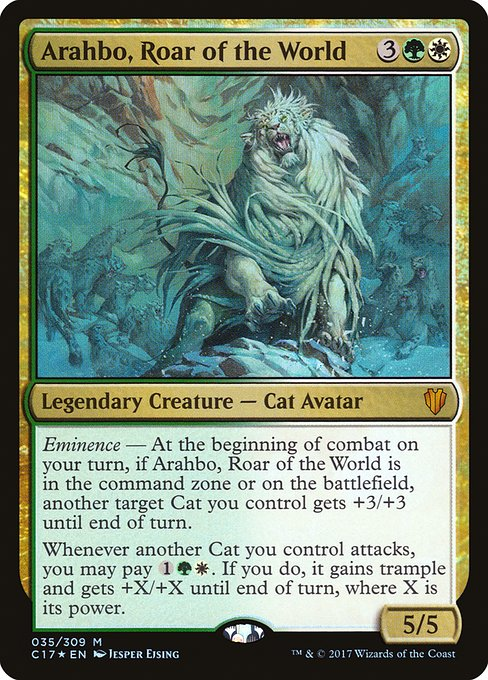
Arahbo’s eminence ability is frequently dismissed for being “fair,” yet its reliability is precisely its competitive virtue in mid-power metas. Free scaling power each combat step converts small Cats into credible threats and makes equipment or aura packages substantially more punishing. The commander also offers a late-game activated boost that can break stalemates without requiring elaborate combo assembly.
Strategic Role at Typical Tables
Arahbo encourages a game plan that pressures life totals early, forcing opponents to spend removal on comparatively inexpensive creatures. This exchange rate is favorable: the Cat player can redeploy threats while others delay their own engines. In 2026, where many decks rely on carefully sequenced setup turns, consistent combat pressure remains an efficient form of interaction.
Arcades, the Strategist: Walls as Card Advantage
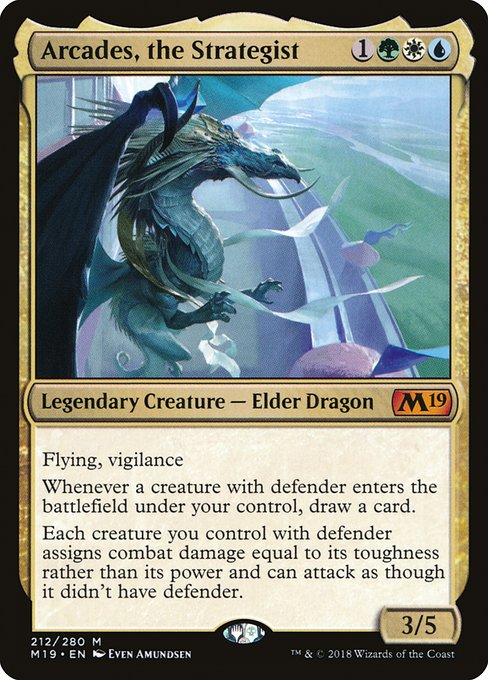
Arcades has long been known, but his tribal identity—Defender/Walls—still tends to be treated as a novelty rather than a principled deck. In fact, Arcades compresses roles exceptionally well: he supplies card draw, turns low-cost defenders into attackers, and creates a coherent curve that naturally resists early aggression. This combination enables a strategy that can stabilize against fast decks while also drawing enough cards to contend with dedicated engine lists.
Why It Ages Well
As removal becomes more efficient and board wipes remain ubiquitous, tribes that can redeploy cheaply and refill quickly retain value. Walls achieve this through redundant low-mana bodies that replace themselves under Arcades, making the deck resilient without relying on graveyard recursion or fragile combo pieces.
Tolsimir, Friend to Wolves: A Tribal Control Shell
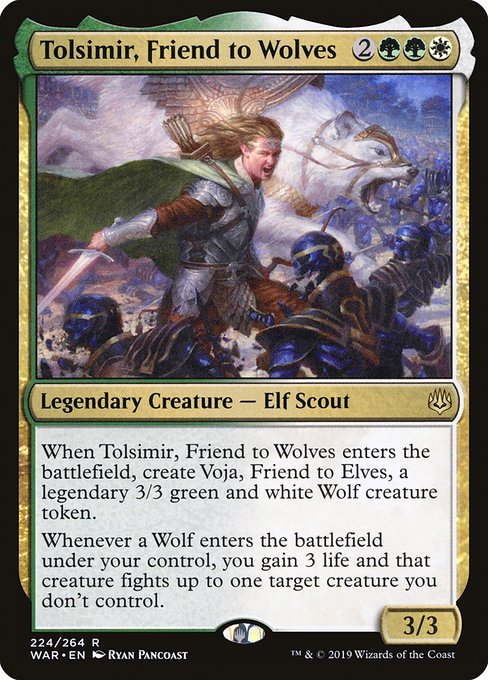
Tolsimir provides an uncommon tribal orientation: Wolves as a repeatable fight-based control plan. Each Wolf arrival functions as both tempo and stabilization, producing life gain and targeted creature removal when advantageous. This makes the tribe less dependent on assembling a critical mass for anthem effects and more focused on leveraging creature entries as interaction. In practice, the deck often plays like a creature-centric control strategy that happens to win through tribal inevitability.
Metagame Relevance
In 2026, many pods feature creature-based value engines and commanders that must remain on board to function. Tolsimir’s fight triggers punish those plans without requiring blue counterspell density, and they do so while advancing the deck’s primary tribal game.
Conclusion: Tribal Diversity as a Competitive Asset
Underrated tribal commanders succeed because they translate tribal density into repeatable, multi-role advantages rather than singular payoffs. Gisa and Geralf excel at post-wrath recovery, Kumena turns tribal bodies into a flexible engine, Arahbo converts early creatures into continuous pressure, Arcades reframes defenders as a draw-driven offense, and Tolsimir uses tribal entries as removal. For 2026, these commanders offer a practical lesson: tribal play is not merely thematic; when paired with structural compression and resilience, it becomes a rigorous strategic framework well suited to modern Commander tables.