
Beyond basic consistency, mono-color decks gain access to powerful utility lands. In a multi-color deck, every land slot is precious. You must use them to fix your colors. In a single-color deck, you can use lands that do more than make mana. For example, a blue deck can use many lands that draw cards. A black deck can use lands that destroy creatures. These lands provide extra value without taking up spell slots. This creates a more dense deck. Every part of the deck works toward a single goal. This creates a synergy that multi-color decks struggle to match. The mana base becomes a weapon rather than just a requirement.
Another factor is the existence of mana hate. Many cards punish players for using too many colors. Blood Moon and Back to Basics are good examples. These cards can stop a multi-color deck completely. They turn expensive lands into useless piles of cardboard. Mono-color decks are mostly immune to these cards. In fact, they can use these cards to win. By playing these cards, a mono-color player can lock their opponents out of the game. This turns a defensive choice into an offensive advantage. It forces the opponents to play the game on your terms. This is a key part of academic game theory. You want to limit your opponent’s options while keeping your own.
Urza
If you buy from these links we will receive a small commission
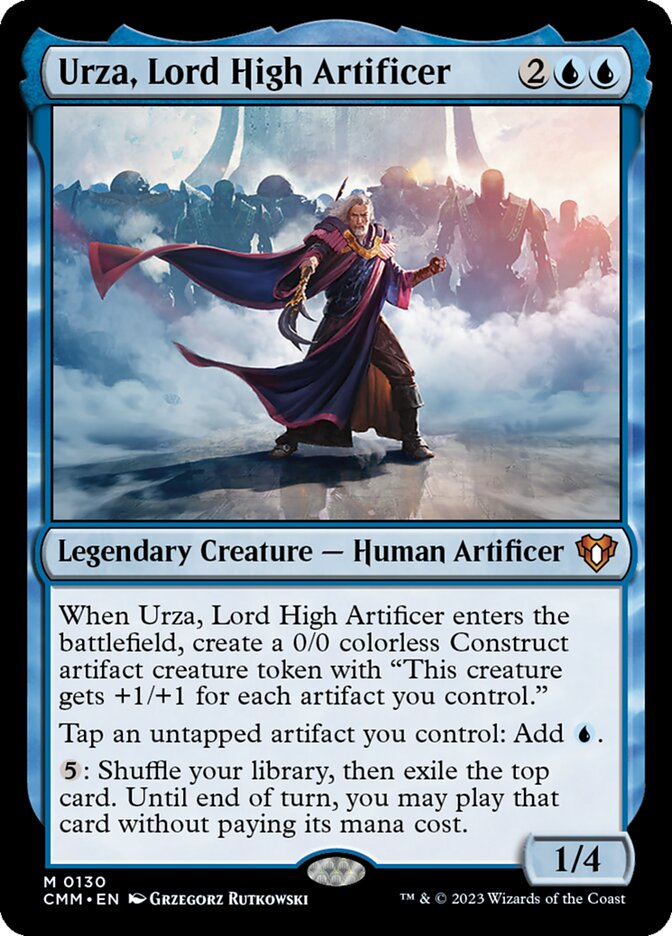
Urza, Lord High Artificer is perhaps the strongest mono-blue commander. He represents the peak of resource conversion. His first ability creates a creature that grows with your artifacts. His second ability lets you tap artifacts for blue mana. This turns every cheap artifact into a mana source. In a multi-color deck, you have to worry about color ratios. Urza ignores this. He turns your utility items into fuel. This allows for very fast turns. You can play your entire hand in a single round. This speed is hard for any multi-color deck to handle. They are often still trying to fix their mana while Urza is winning the game.
Urza also provides a way to spend that mana. His third ability lets you play the top card of your library for five mana. This is a powerful form of card advantage. Since you can tap your artifacts for mana, you can use this ability many times. This creates a loop of value. You make mana, you play cards, and you make more artifacts. This level of efficiency is rare. Most multi-color decks need several cards to create this kind of engine. Urza does it all by himself. He is a one-man army. This makes the deck very resilient to board wipes. If Urza is on the field, the deck is a threat. This focus on a single engine is why he stays at the top of the rankings.
Selvala
If you buy from these links we will receive a small commission
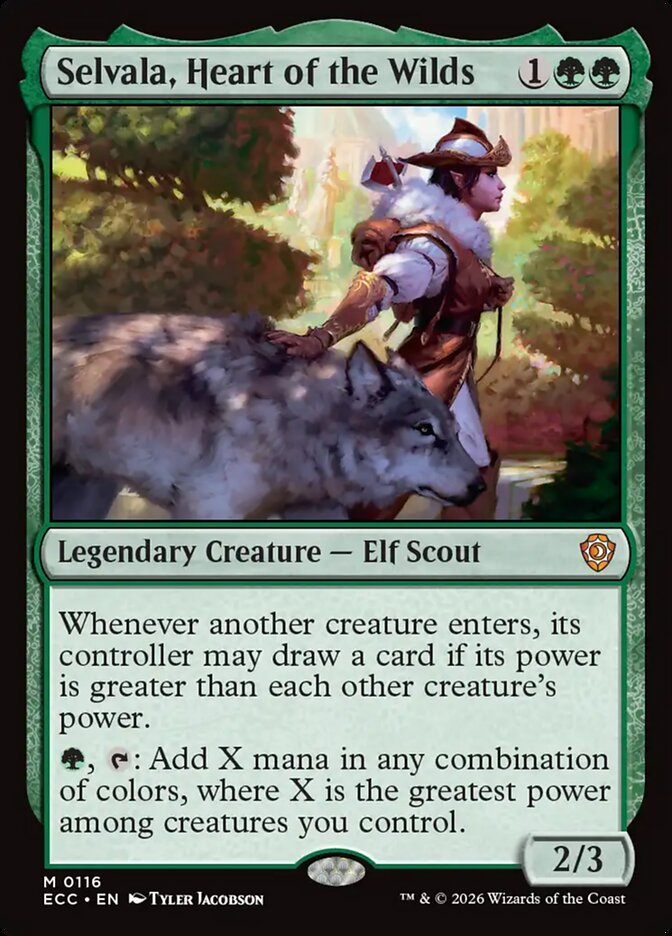
Green is the color of growth and nature. Selvala, Heart of the Wilds is the best example of this. She rewards the player for playing big creatures. When a creature enters the field, if its power is the highest, you draw a card. This keeps your hand full. Her second ability is even better. You can pay one green mana and tap her. She then adds mana equal to the greatest power among creatures you control. This can lead to huge amounts of mana very early in the game. A multi-color deck might produce five mana on turn five. Selvala can easily produce ten or twenty mana on turn four. This puts the mono-green player far ahead of the curve.
This mana advantage allows the player to bypass the normal rules of the game. You can play massive threats that demand an answer immediately. If the multi-color player does not have a removal spell, they lose. Selvala decks also use many cheap creatures that pump up their power. This makes the mana production even more explosive. The deck does not care about variety. It only cares about power and mana. This narrow focus makes it very hard to stop. It forces the table to react to you. In competitive games, being the person who asks the questions is better than being the person who has the answers. Selvala asks a question that few decks can answer in time.
K’rrik
If you buy from these links we will receive a small commission
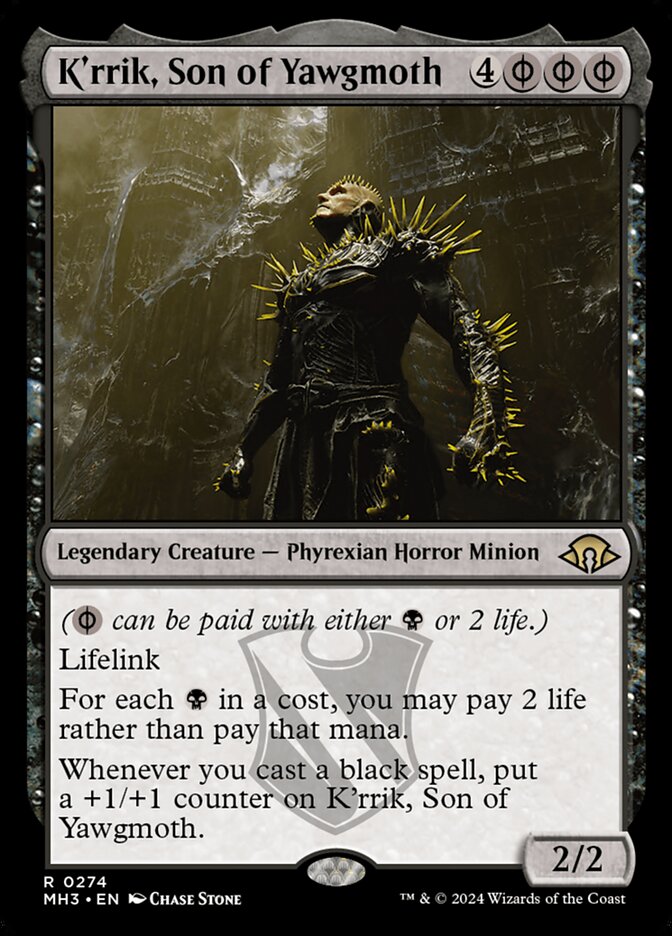
Black is the color of sacrifice. K’rrik, Son of Yawgmoth is the master of this theme. He allows you to pay two life instead of black mana for any black mana symbol. This is a game-changing effect. It turns your life total into a second mana pool. In a format where you start with forty life, this is a massive resource. You can play your commander on turn one or two. Once he is out, every spell in your deck becomes much cheaper. This allows for incredibly fast combos. Many multi-color decks are too slow to keep up with this pace. They are building a mana base while the K’rrik player is already ending the game.
K’rrik also has lifelink. This means he can gain back the life you spend. This creates a sustainable system of resource use. You spend life to play spells. Those spells help K’rrik attack. K’rrik gains life. You spend that life again. This cycle is a perfect example of economic efficiency. It removes the need for lands to some degree. As long as you have life, you have mana. This makes the deck very hard to predict. A player with no open mana is usually safe to ignore. A K’rrik player with no open mana can still play their whole deck. This creates a psychological advantage. Your opponents are always on edge. This pressure often leads them to make mistakes.
Conclusion
When we compare these decks to multi-color options, a pattern emerges. Multi-color decks are “jacks of all trades.” They can do anything, but they are rarely the best at one specific thing. They are slower and more fragile. Mono-color decks are specialists. They do one thing better than anyone else. In a format as fast as Commander, specialization wins. The math shows that having a 100 percent chance to hit your colors is better than having a 90 percent chance. Those small gaps are where games are won and lost. The mono-color commanders we discussed prove this. They dominate the table by being faster and more reliable.
In conclusion, players should not overlook the power of a single color. While multi-color decks are flashy, they often crumble under their own weight. Mono-blue offers control and artifice. Mono-green offers raw speed and power. Mono-black offers a way to break the mana system entirely. Each of these strategies is more robust than a generalized multi-color plan. By focusing on one color, you can master your deck. You can build a mana base that never fails. You can use your resources more efficiently. If you want to win more games, look toward the mono-color legends. They offer a path to victory that is both simple and profound. The data is clear. Focus beats variety in the arena of competitive Magic.