
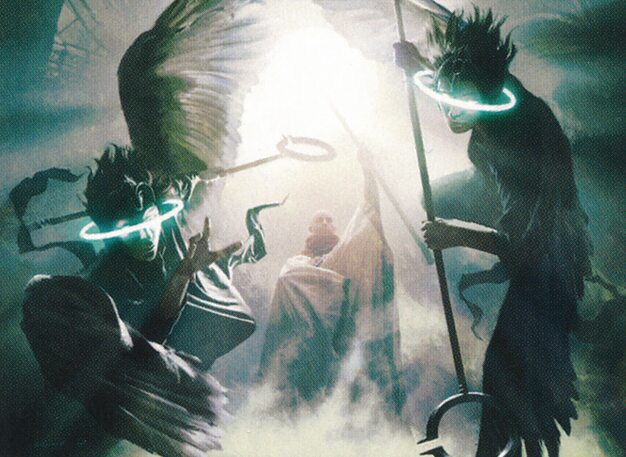
The foundation of any pillow fort is the concept of taxation. In game terms, taxation refers to adding an extra cost to an action. This action is usually the act of attacking. By forcing opponents to pay mana to declare attackers, the pillow fort player limits the opponent’s resources. In a typical turn, a player wants to use their mana to cast spells. When they must spend that mana just to attack, their offensive momentum slows down. This creates a strategic dilemma. The opponent must choose between developing their board or dealing damage. This delay is exactly what the defensive player needs. It buys time to draw cards and set up more permanent solutions. Taxation is effective because it scales with the number of creatures on the board. The more a player tries to swarm the fort, the more mana they must pay. This makes wide strategies very difficult to maintain against a well-set defense.
Taxation effects are often found on white and blue enchantments. These colors excel at controlling the flow of the game. They provide the most consistent tools for damage mitigation. When these cards are played early, they act as a deterrent. Most players will look for a softer target at the table. This is especially true in multiplayer games. If attacking Player A costs four mana and attacking Player B costs zero, Player B is the logical target. This psychological element is a key part of the pillow fort strategy. You are not just building a physical wall of cards. You are building a mental wall that directs aggression elsewhere. This allows you to survive into the late game where your deck is designed to thrive.
Essential Taxation Cards
Ghostly Prison and Propaganda

Ghostly Prison and Propaganda are the two most iconic cards in this category. They are functional clones of each other in different colors. Ghostly Prison is white, while Propaganda is blue. Both cards state that creatures cannot attack you unless their controller pays two mana for each creature. This simple text has a massive impact on the game. In the early game, two mana is a significant portion of a player’s total resources. If an opponent has three creatures, they must pay six mana to attack with all of them. This often prevents them from casting any other spells during their turn. These cards are highly efficient because they only cost three mana to cast. They can be deployed before most aggressive decks have established a lethal threat. They provide a high return on investment for the defensive player.

The efficacy of these cards increases when they are played together. If both are on the battlefield, the tax becomes four mana per creature. This is usually enough to stop all but the most dedicated attacks. These cards form the bedrock of the pillow fort archetype. They are easy to include in any deck that runs white or blue. Their presence forces opponents to change their entire game plan. Instead of focusing on your life total, they must focus on finding enchantment removal. This shifts the focus of the game to your terms. You are now the one dictating how the combat phase functions.
Sphere of Safety

While Ghostly Prison provides a flat tax, Sphere of Safety offers a scaling defense. This enchantment costs five mana, which is higher on the curve. However, its effect is much more powerful in a dedicated enchantment deck. It forces opponents to pay X mana for each creature attacking you. X is equal to the number of enchantments you control. In a pillow fort deck, this number can easily reach five or ten. At that point, attacking becomes mathematically impossible for most decks. Even a single creature would require an entire turn’s worth of mana to attack. Sphere of Safety acts as the ultimate lock piece. It rewards the player for leaning heavily into the enchantment theme. It turns every other defensive piece into a contributing factor for the tax. This synergy makes it a primary target for opponents, but it is often game-ending if it stays on the board.
Layered Protection and Hexproof
Sterling Grove and Greater Auramancy

A major weakness of the pillow fort strategy is targeted removal. If an opponent can destroy your tax pieces, your defense crumbles. To prevent this, players use cards that provide hexproof or shroud to their permanents. Sterling Grove and Greater Auramancy are the gold standard for this role. Sterling Grove is a green and white enchantment. It gives all your other enchantments shroud. This means they cannot be the target of spells or abilities. It also has a secondary ability that allows you to search for an enchantment. This dual utility makes it an auto-include. It protects your fort while also helping you find the pieces you need to complete it.
Greater Auramancy provides a similar effect by giving your other enchantments and enchanted creatures shroud. When you have two of these effects on the board, they protect each other. This creates a state known as a lock. Opponents cannot target any of your enchantments because they are all protected. They would need a non-targeted board wipe, like Farewell or Austere Command, to break the defense. This layered approach is vital for long-term survival. It ensures that your investment in the fort is not easily undone by a single spell. Protecting the protectors is a core tenet of professional-level defensive play.

Alternative Methods of Deterrence
No Mercy and Dread

Not all pillow fort cards rely on taxation. Some rely on the threat of retaliation. This is known as the rattlesnake effect. No Mercy is a black enchantment that destroys any creature that deals damage to you. It does not prevent the damage, but it ensures the attacker is punished. This creates a strong psychological barrier. Most players do not want to lose their best creatures just to deal a few points of damage. No Mercy is particularly effective against large, singular threats. It tells the opponent that the cost of attacking is the life of their creature. Dread is a creature version of this effect. It has the added benefit of being a large body that can block or attack. These cards complement taxation pieces by providing a second layer of defense. If an opponent pays the mana to attack, they still lose their board presence. This double penalty is often too much for most decks to handle.

Solitary Confinement

Solitary Confinement is perhaps the most extreme version of a pillow fort card. It prevents all damage that would be dealt to you. It also gives you shroud, meaning you cannot be the target of spells. However, it comes with a steep price. You must discard a card at the beginning of your upkeep, and you skip your draw step. To use this card effectively, you must have a way to draw extra cards. Cards like Rhystic Study or Mystic Remora are often used to fuel this defense. When properly supported, Solitary Confinement makes you completely invincible. It is the ultimate expression of the pillow fort philosophy. You are locked away in a private room where nothing can hurt you. It is a high-risk, high-reward strategy that requires careful deck building to maintain.
Winning from Behind the Walls
A common critique of the pillow fort is that it does not win the game. It only stops you from losing. To be successful, a deck must eventually transition to an offensive state. Some cards allow you to do this while maintaining your defense. Luminarch Ascension is a perfect example. It gains counters on each opponent’s end step if you didn’t lose life. Once it has four counters, you can pay two mana to create a 4/4 flying Angel token. In a pillow fort, keeping your life total intact is easy. This card turns your defense into a win condition. You can generate an army of Angels during your opponent’s end steps. Another popular choice is Approach of the Second Sun. This spell wins the game if you cast it twice. Since the pillow fort buys you so much time, casting a seven-mana spell twice is a realistic goal. These cards ensure that your defensive efforts lead to an eventual victory.

Conclusion
Building a pillow fort is a sophisticated way to play Magic: The Gathering. It requires a deep understanding of resource management and player psychology. By using taxation, protection, and deterrence, a player can control the pace of the game. Cards like Ghostly Prison and Sphere of Safety provide the structural integrity for this strategy. Meanwhile, cards like Sterling Grove ensure that the fort remains standing against enemy interaction. While it may seem passive, the pillow fort is a highly proactive way to dictate the terms of engagement. It forces opponents to play your game. For those who enjoy outlasting their rivals through superior planning, the pillow fort remains the premier choice. It is a testament to the strategic depth of the game that such a defensive posture can be so effective and enduring.

[url=https://ksxytor.ru/otdykh-v-palatke-na-beregu-ozera.html]Места отдыха в палатках[/url] — отличный вариант для тех, кто хочет провести несколько дней на природе, рядом с водой и вдали от городской суеты. Просторная территория, свежий воздух, лесные прогулки и красивые пейзажи создают атмосферу настоящего загородного отдыха. Днём можно отправиться на рыбалку, искупаться или совершить прогулку, а вечером устроить ужин на свежем воздухе. Подходит для семей, компаний друзей и любителей самостоятельных путешествий. Удобное размещение палатки позволяет наслаждаться природой и проводить время в спокойной обстановке.