
The Commander format of Magic: the Gathering is a unique social game. Unlike two-player matches, multiplayer games require more than just strong cards. They require a deep understanding of human behavior. This is known as politics. Players must manage threats while also managing their own image at the table. A player who looks too strong becomes a target. A player who looks too weak may be ignored until it is too late. To win, a player often needs tools that influence how others play. These tools are political cards. This article examines the best political cards for the multiplayer environment. We will look at how they shift the game in your favor through incentives and deterrence.
The Carrot Method
Incentive-based politics is often called the carrot method. These cards give your opponents a reason to leave you alone. Instead of hurting them, you offer them a benefit for attacking someone else. This moves the pressure away from you. It also uses your opponents’ resources to lower the life totals of your rivals. This strategy is very effective in the early to mid-game stages.

Edric, Spymaster of Trest is a classic example of this mechanic. Edric allows any player to draw a card when they hit one of your opponents with a creature. This is a powerful draw engine. However, the catch is that they only get the card if they do not attack you. Most players find the lure of extra cards hard to resist. They will often send their creatures at each other to get the reward. You benefit because your opponents are fighting while you build your own board state. You also get to draw cards when you attack them.

Breena, the Demagogue is another modern powerhouse for this style. Breena triggers when a player attacks an opponent who has more life than you. The attacking player gets to draw a card. You get two counters on one of your creatures. This creates a cycle of value. Opponents will attack the person with the most life to draw a card. This keeps the lead player in check. At the same time, Breena grows into a massive threat on your side of the field. It turns the basic math of the game into a political tool. It rewards players for helping you maintain your position.

Gluntch, the Bestower offers a softer form of diplomacy. At the end of your turn, you choose three different players. One gets counters, one gets treasure tokens, and one draws cards. By choosing your opponents for these gifts, you can forge temporary alliances. You can help a player who is struggling so they can deal with a major threat. This builds social capital. Players are less likely to attack the person who is giving them free resources. It is a subtle way to control the flow of the game without being seen as a bully.
The Stick Method
While incentives pull players away, deterrence pushes them back. This is known as the stick method. These cards make it painful or difficult to target you. They do not necessarily stop an opponent from winning. Instead, they make attacking you an inefficient choice. In a game with three other targets, efficiency is king. If it costs more to attack you than someone else, the opponent will usually choose the cheaper path.
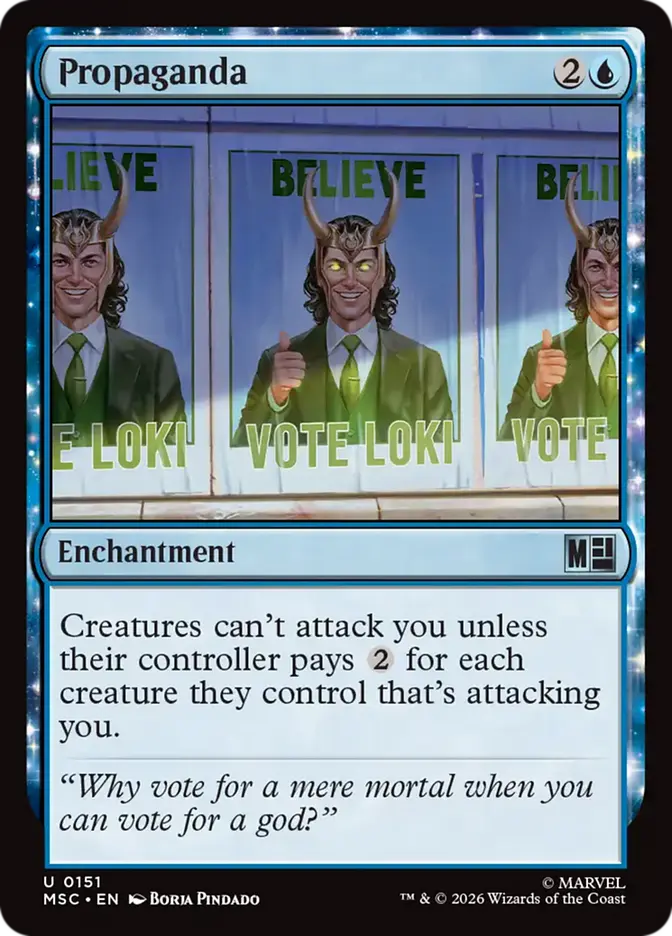
Ghostly Prison and Propaganda are the most famous deterrence cards. They require opponents to pay two mana for each creature that attacks you. In the early game, this is a huge tax. Most players would rather spend their mana on new spells. Even in the late game, it limits how many creatures can come your way. These cards do not take away the opponent’s choice. They simply add a cost to it. This cost often directs the combat phase toward your rivals instead of you.
No Mercy provides a more violent form of deterrence. It does not stop the attack. However, it ensures that any creature that deals damage to you is destroyed. This creates a wall of fear. Most players will not want to lose their best creatures just to deal a few points of damage to you. No Mercy acts like a psychological shield. It tells the table that attacking you will result in a loss of board presence. This often buys you the time you need to find your own win condition.

Cunning Rhetoric is a black enchantment that adds a different risk. When a player attacks you, you exile the top card of their library. You may then play that card using any color of mana. This turns their aggression into your advantage. You are not just stopping them from attacking. You are threatening to steal their spells. This makes you a very risky target. Players hate having their own cards used against them. This card excels at keeping the heat off you while providing a steady stream of extra options.
Negotiation and Selective Interaction
Some cards are designed to spark a conversation at the table. These cards require a vote or a choice. This forces players to reveal their intentions. It also allows you to make deals in real time. These cards are the heart of the political experience in Commander. They turn a card game into a social negotiation.

Council’s Judgment is a premier removal spell for this reason. Every player votes for a nonland permanent. The permanent with the most votes is exiled. Since you start the vote, you can suggest a target. Often, the table will agree on the biggest threat. This card is special because it does not target. This means it can remove creatures with protection or hexproof. It relies on the collective will of the table to deal with a problem. It builds a sense of teamwork against a common enemy.

Scheming Symmetry is a high-risk political tool. It allows you and one chosen opponent to search your libraries for a card. You both put that card on top. This is a great way to make a friend. You can offer this to a player who needs an answer to a dangerous board state. By helping them, you help yourself. However, you must trust that they will not use the card against you. This card tests your ability to read the table. It is a test of your social skills as much as your deck-building skills.

Humble Defector is a unique creature that embodies the spirit of sharing. You can tap him to draw two cards. Then, an opponent of your choice gains control of him. In a social game, two players can pass him back and forth. This allows both players to draw many cards while the other two players fall behind. This creates a powerful two-person alliance. It is a great way to stabilize if you are behind. It also forces the other players to find a way to break the cycle.
Strategic Implementation of Politics
Using these cards requires more than just casting them. You must understand the timing of your plays. A political card played too early can make you look like a manipulator. A card played too late may not have time to work. The goal is to use these cards to guide the game toward a state where you can win. You want your opponents to spend their resources on each other. When they are exhausted, you can make your move.
You must also be honest with your deals. If you break a promise in a political game, the table will remember. Your reputation is a resource just like your mana. Using cards like Fact or Fiction or Fortune’s Favor involves an opponent in your card draw. By letting them split the piles, you give them a sense of agency. This can reduce the resentment they feel when you draw powerful spells. Even small gestures of inclusion can change how the table views your presence.
Finally, remember that politics is a tool, not a win condition. You still need a way to end the game. The best political cards help you survive long enough to reach your end goal. They create the environment where your strategy can succeed. Whether you use the carrot or the stick, these cards make every game of Commander a fresh experience. They highlight the social nature of the format and reward players who can navigate the complex web of human interaction.